
Doan Thi Nhung

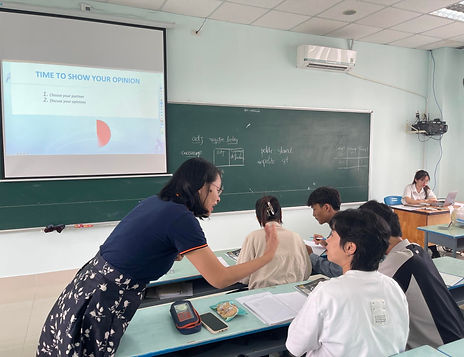
One of the most significant skills I have developed during my practicum is the ability to analyze and assess classroom dynamics, particularly through the use of games. Observing how experienced teachers manage class interactions during game sessions has been enlightening. I have learned to pay close attention to their gestures, language of instruction, and how they engage students, creating a lively and inclusive atmosphere. However, I also noted that some teachers attempted to cover all activities in the book despite time constraints, which proved ineffective for low-level classes. This observation highlighted the importance of prioritizing activities and adapting them to fit within the available time while meeting the students' proficiency levels. Moving forward, I plan to avoid overloading my lessons and focus on the quality rather than the quantity of activities.
Moreover, practicum is also a precious opportunity for me to work in team. Working in a team to build comprehensive lesson plans has been an invaluable experience. It has taught me that being a teacher is not an isolated endeavor but a collaborative one that involves working closely with other educators and students. This collaboration has helped me appreciate the diversity of ideas and teaching styles, and how they can be integrated to create more effective and engaging lessons. By learning to accept and embrace the diverse perspectives of my colleagues and students, I have become more adaptable and open-minded, enhancing my ability to create inclusive learning environments.
The practicum has also brought about significant changes in my behavior and perception regarding classroom management and instructional strategies. I now recognize the value of incorporating games into my lessons to break the ice and foster a more engaging and enjoyable learning experience. Gamification can be a powerful tool to enhance student motivation and participation. Furthermore, I have become more adept at matching tasks with the time constraints and the varying levels of student proficiency. This means carefully selecting and adapting materials to ensure they are appropriate for the students' needs and the available time. By focusing on these aspects, I aim to create more effective and student-centered lessons.
In conclusion, my practicum experience has equipped me with critical analytical and assessment skills, the ability to collaborate effectively with others, and a more flexible and student-focused approach to teaching. These professional skills will undoubtedly contribute to my growth as an educator and enhance my ability to create dynamic and inclusive learning environments.